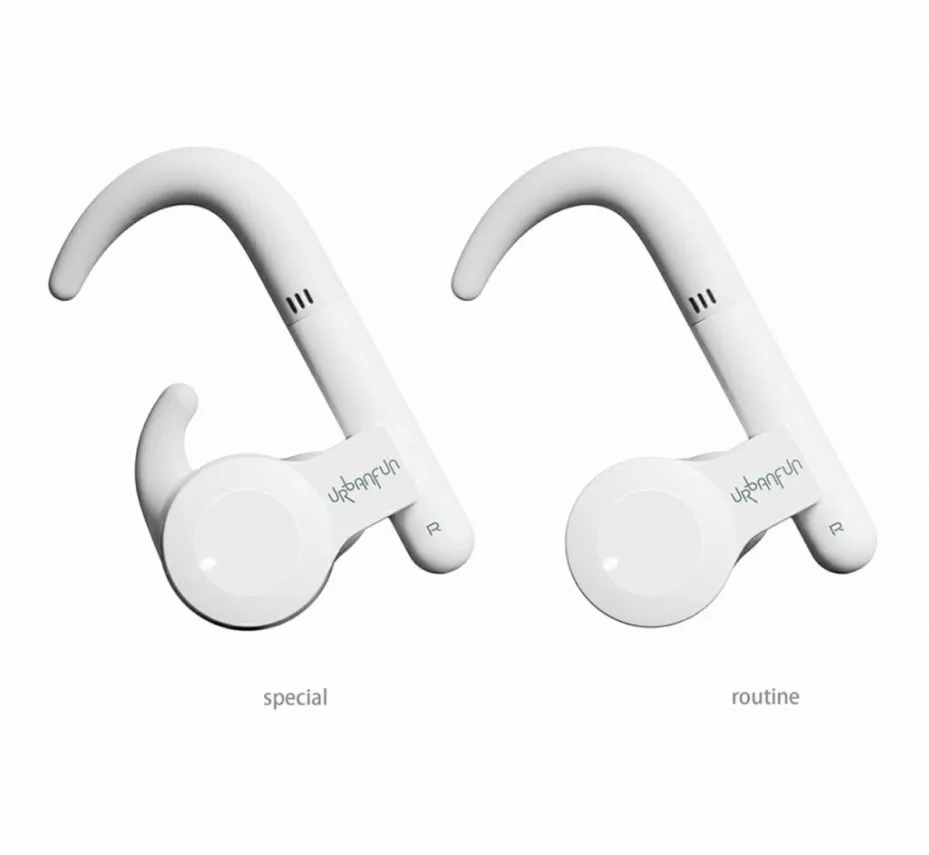
Wireless Bone-Conduction Earbuds
Redesigning personal audio around comfort, awareness and everyday movement.
XCL capabilities
Design & Engineering
Prototyping & Validation
Client
Dongguan Transsound Electronics
Product
Wireless Stereo Bone-Conduction Earbuds
Sub-industry
Consumer Technology
Year
2018
XCL involvement
Product Design & Development Contribution
Creating a more open way to experience personal audio.
Traditional earbuds create an enclosed listening experience by positioning the speaker within the ear canal. This project explored a different approach: using bone-conduction technology to deliver personal audio while allowing users to remain more aware of their surroundings.
XCL contributed to the broader product design and development effort, helping transform the underlying audio technology into a compact true-wireless product designed around comfort, stability and everyday use.
The challenge was particularly physical. The vibration unit, battery, PCB and supporting components all needed to fit within a product worn directly around the ear without creating excessive size, weight or discomfort.
Fitting sophisticated audio technology around the human ear.
The initial functional architecture presented two significant problems.
The vibration unit was too large to sit comfortably inside the ear canal, while the arrangement of the internal components created excessive thickness and caused part of the product to protrude when worn. This also affected stability.
The development therefore focused on several interconnected challenges:
- Wearability — Creating a product capable of remaining comfortable during extended use.
- Fit & Stability — Developing geometry that could accommodate different ear sizes while remaining secure during movement.
- Internal Packaging — Finding a more efficient arrangement for the vibration unit, PCB and battery.
- Audio Performance — Supporting the advantages of bone-conduction technology while addressing challenges such as sound leakage and bass performance.
- Everyday Awareness — Allowing users to listen to audio without completely isolating themselves from their surroundings.
Designing technology around the way people actually wear it.
As part of the wider product-development effort, XCL contributed to bringing together industrial design, ergonomics and internal product architecture.
Product strategy
Market analysis examined existing true-wireless products across different price levels and form factors.
The product was positioned toward the mid-to-high-end consumer market, with a design direction centred around a minimal, refined and contemporary appearance rather than closely following established earbud forms.
Industrial design
The industrial design needed to communicate a recognizable audio product while accommodating a fundamentally different internal technology.
Rather than forcing the bone-conduction system into a conventional earbud architecture, the physical form was developed around the requirements of the technology and the way the product interacts with the ear.
Ergonomics & wearability
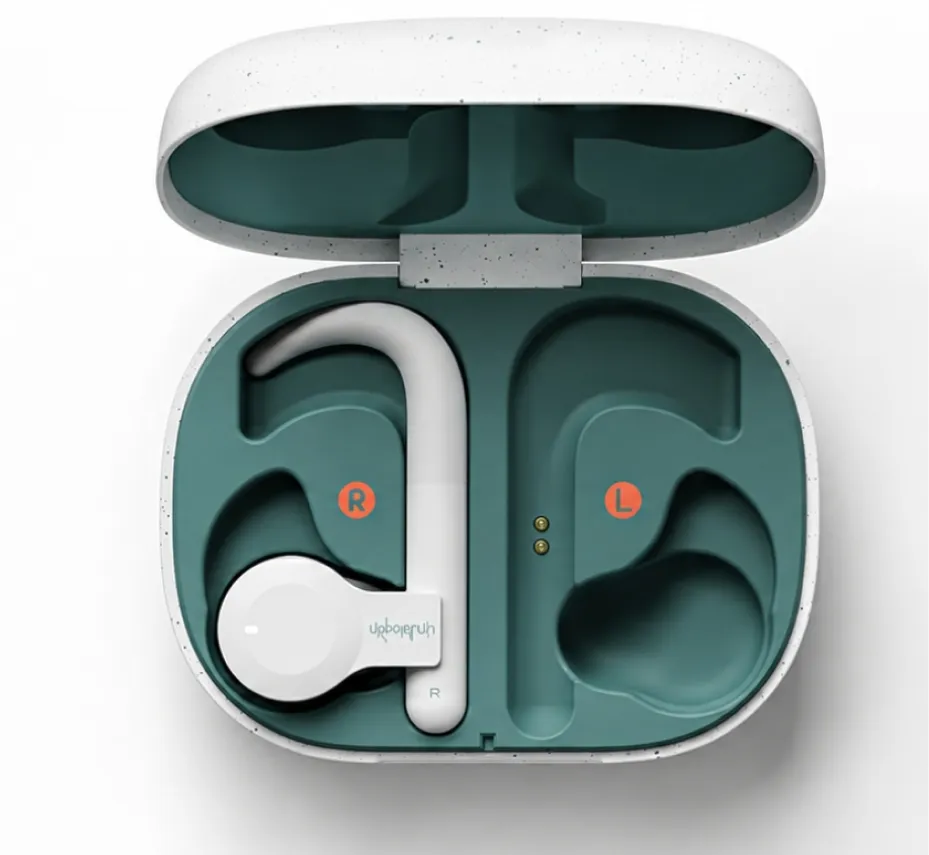
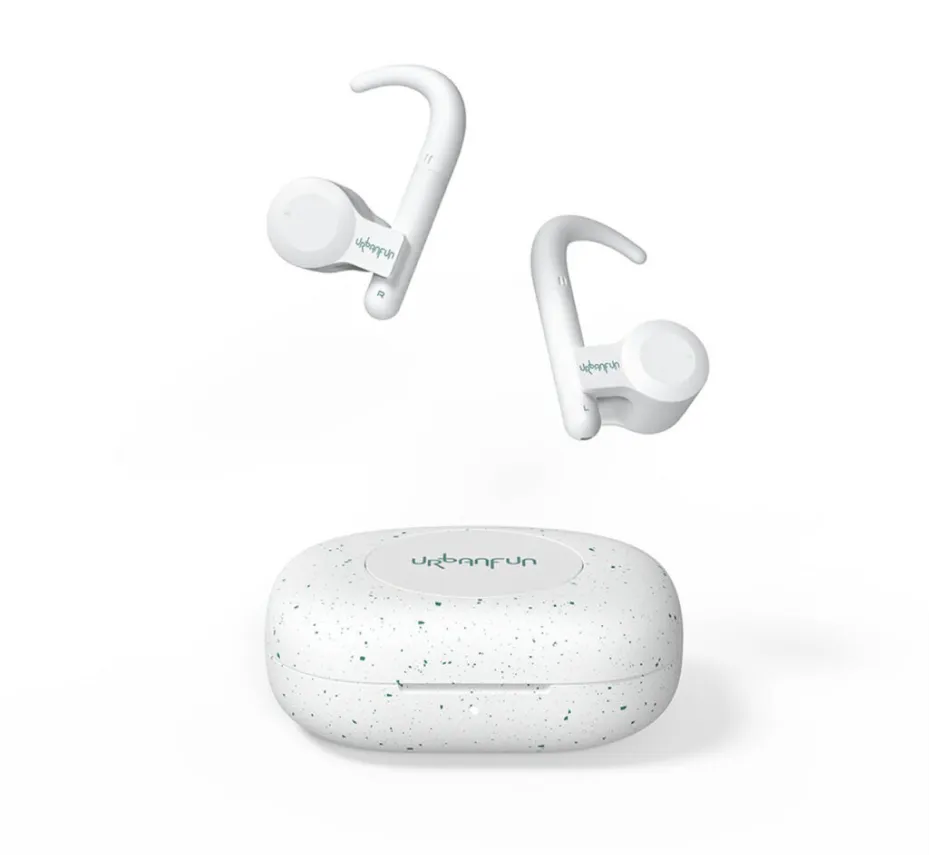
A major development decision was positioning the vibration unit outside the ear canal.
This helped address discomfort created by the larger bone-conduction component while allowing the product to maintain the intended open-ear experience.
Multiple rounds of wearing tests were then used to refine the geometry and improve comfort and stability.
Internal architecture
Component arrangement played an important role in reducing the product’s perceived and physical bulk.
The original button battery was replaced with a cylindrical battery, while the PCB was repositioned between the vibration unit and battery.
This changed the internal distribution of components, shifted the centre of gravity inward and helped create a more compact wearable architecture.
Modular fit
Different users have significantly different ear shapes and sizes.
A modular structure was therefore developed to make the product more adaptable across users while improving the security of the fit.
Interaction
Touch-based controls replaced the need for conventional physical-button interaction.
This reduced the pressure associated with pressing a mechanical control against a product already positioned closely around the ear and supported a cleaner external design.
Prototyping & validation
Repeated wearing tests were particularly important for this product because dimensions that appear appropriate in CAD can behave very differently when interacting with the human ear.
Physical evaluation allowed the product’s fit, component positioning, comfort and stability to be progressively refined toward a production-ready configuration.
A different approach to true-wireless audio.
The resulting product combines true-wireless stereo functionality with a semi-in-ear bone-conduction architecture designed to provide a lighter, more open listening experience.
The final configuration addressed the original challenges around component thickness, wearing position and stability while allowing users to remain aware of their surrounding environment.
For XCL, the project demonstrates how product architecture, ergonomics and technology have to develop together when designing something that becomes an extension of the human body.
Explore more projects
Designing a lighter, more wearable approach to augmented reality.
Design & Engineering
Prototyping & Validation
Read More