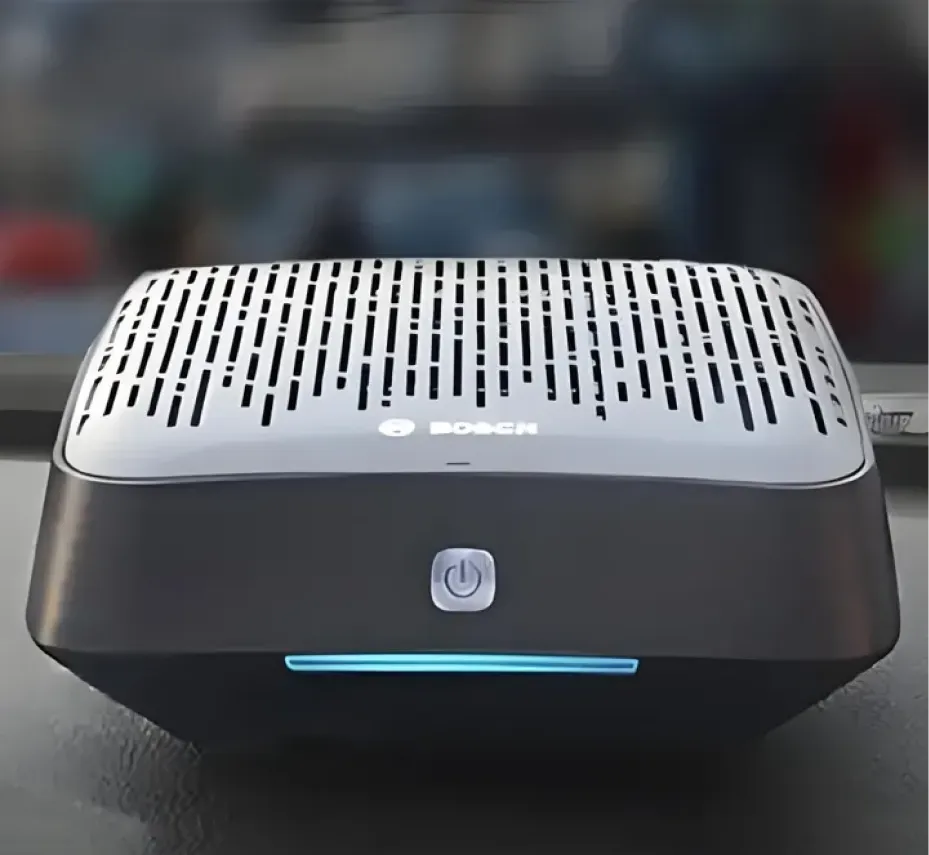
Bosch Car Air Purifier
Bringing cleaner air and clearer information into the vehicle.
XCL capabilities
Design & Engineering
Prototyping & Validation
Client
Bosch
Product
Car Air Purifier
Sub-industry
Mobility & Transportation
Year
2015
XCL involvement
Product Design & Development Contribution
Designing a smarter approach to in-car air quality.
Bosch set out to develop a premium in-car air purification system that could combine effective filtration, accurate air-quality monitoring, and an intuitive user experience within a compact automotive product.
XCL contributed to the product design and development effort as part of the broader team behind the project, helping bring together product design, physical architecture, usability, and technical requirements into a cohesive solution.
The challenge was not simply to create another air purifier. The product needed to communicate Bosch’s reputation for precision and engineering while giving drivers clear, real-time information about the quality of the air inside their vehicle.
Complex technology within a compact automotive product.
The product needed to integrate multiple technologies and components within a relatively small physical package while remaining appropriate for a vehicle interior.
Key considerations included:
- Air-Quality Monitoring — Providing accurate, real-time information about conditions within the vehicle.
- Airflow & Filtration — Creating an effective internal airflow path around the filtration system.
- Component Integration — Packaging sensors, processing electronics, filtration components and airflow systems efficiently.
- User Experience — Giving drivers information in a way that could be understood quickly without creating unnecessary distraction.
- Automotive Integration — Developing a product whose form, interface and materials felt appropriate within a modern vehicle interior.
Connecting product design, engineering and user experience.
XCL contributed to the broader product-development process, helping translate the technical requirements of the purification system into a more integrated physical product.
Industrial design
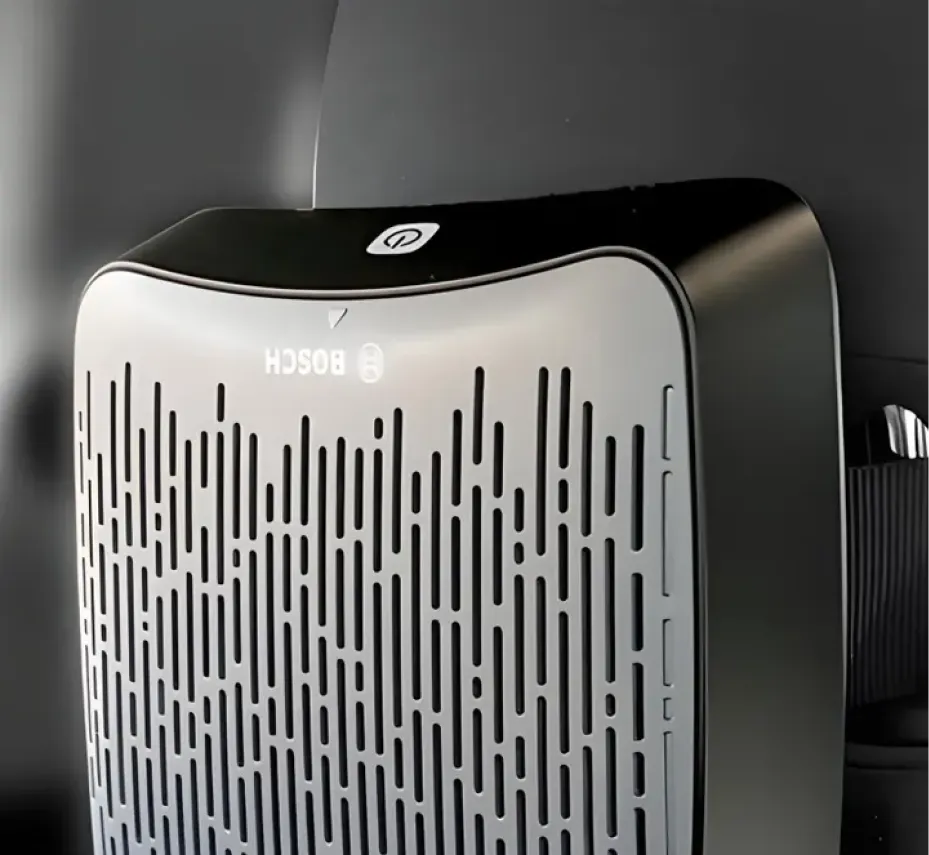
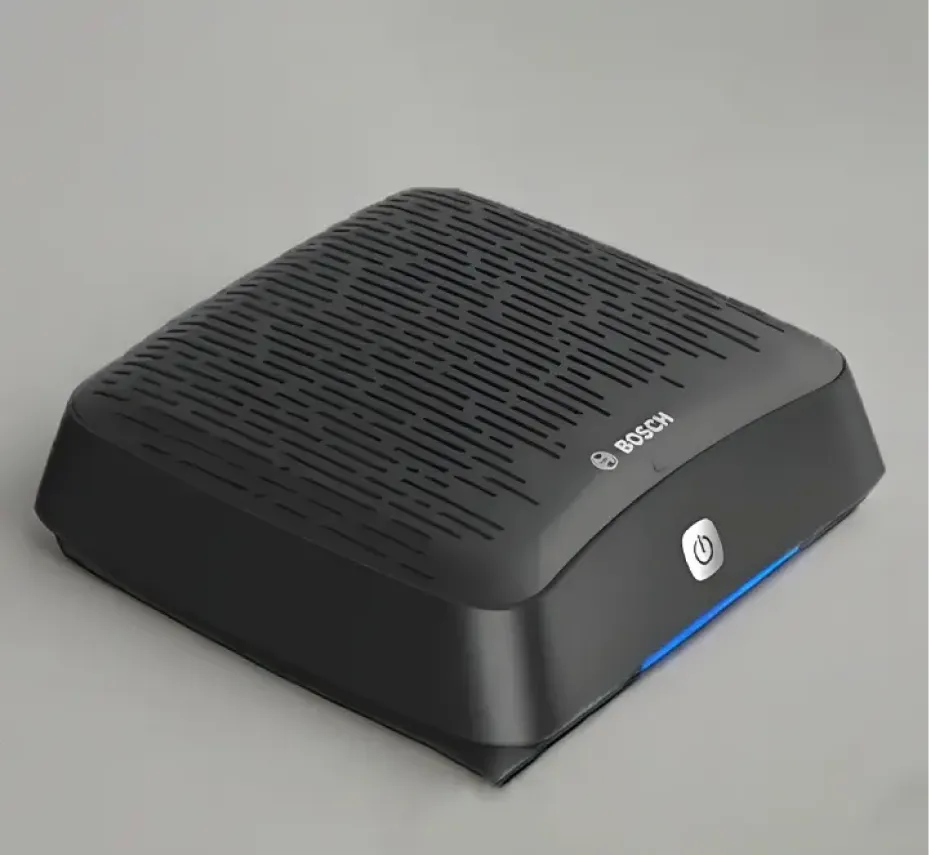
The product was developed with a distinctive architectural form intended to give the air purifier a stronger technological identity while remaining appropriate for an automotive environment.
The front surface, lighting, display and ventilation elements were integrated into the overall product rather than treated as separate components.
User interface
A central display and visual indicators were incorporated to communicate operating status and air-quality information.
The objective was to make complex environmental information easier for the driver to understand at a glance.
Mechanical development
One of the main engineering challenges was packaging the filtration system, fan, sensors, electronics and supporting components within the available space.
The internal architecture and airflow path were developed to support purification performance while controlling size and operating noise.
Sensor & system integration
The system incorporated air-quality sensing and processing technology for monitoring pollutants including PM2.5 and TVOC.
Bringing sensing, filtration, processing and user feedback together required the product to function as an integrated system rather than simply a physical enclosure.
Prototyping & validation
Functional prototypes were used throughout development to evaluate the product before production.
Testing covered areas including purification performance, sensor accuracy, noise and vibration, and system/software stability under simulated vehicle conditions.
A premium air-quality product for the automotive environment.
The resulting product brought filtration, sensing, electronics, interface design and industrial design together within a compact in-car system.
The Bosch car air purifier launched in 2015, establishing an initial premium product within Bosch's car air-purification category and providing a foundation for further product development in the space.
For XCL, the project demonstrates how design and engineering can turn complex internal technology into a product that feels simple and understandable to the person using it.
Explore more projects
Designing a lighter, more wearable approach to augmented reality.
Design & Engineering
Prototyping & Validation
Read More