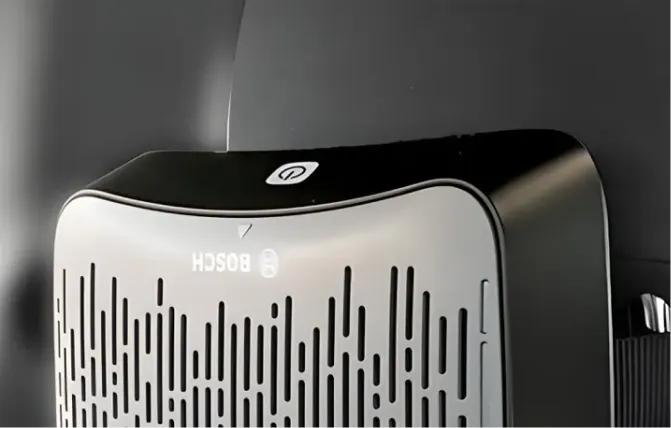
MyWiFi Indoor Router
Rethinking connectivity for the spaces people share.
XCL capabilities
Design & Engineering
Prototyping & Validation
Client
Maiwaidi / MyWiFi
Product
Indoor Router
Sub-industry
Consumer Technology
Year
2020
XCL involvement
Product Design & Development Contribution
Making public connectivity part of the environment.
Public Wi-Fi infrastructure needs to perform reliably while existing within spaces designed around people—not technology.
The MyWiFi Indoor Router was developed for public environments requiring accessible and dependable wireless connectivity, including airports, hospitals and other shared indoor spaces.
XCL contributed to the wider product design and development effort, helping explore how networking technology could move away from the conventional appearance of routers and become a cleaner, more adaptable part of the environments in which it operates.
The challenge was to balance connectivity, installation flexibility, component integration and industrial design within one compact product.
Technology that needed to work without dominating the space.
Conventional routers are typically designed around their technical function, with antennas, ports and other components contributing to a distinctly electronic appearance.
That becomes more challenging when networking equipment is installed in carefully designed public spaces.
The development therefore focused on several priorities:
- Environmental Integration — Creating a product that could sit naturally within hospitals, airports and other public interiors.
- Flexible Installation — Allowing the same product to work across different physical environments and installation requirements.
- Component Integration — Reducing visible technical clutter by incorporating networking components within the overall product architecture.
- Clear Product Identity — Giving the router a recognizable form without making the technology unnecessarily visually dominant.
- Functional Performance — Maintaining the fundamental connectivity requirements expected from public Wi-Fi infrastructure.
Turning networking infrastructure into a considered physical product.
As part of the broader development effort, XCL contributed to translating the functional requirements of public networking hardware into a simpler and more adaptable product.
Product strategy
The development considered both trends in networking equipment and the environments where the product would ultimately operate.
Public spaces presented different requirements from conventional home networking. Hospitals, airports and similar environments required equipment capable of adapting to architecture and installation conditions while maintaining a clean visual presence.
Industrial design
The router moved away from the familiar rectangular form and exposed antennas associated with conventional networking equipment.
A rounded, circular architecture created a cleaner visual identity, with the form intended to communicate ideas of connection and communication while integrating more naturally into interior environments.
Component integration
One of the important design decisions was bringing the signal-reception components inside the circular housing.
Concealing these elements reduced visual clutter and allowed the exterior to read as a single integrated object rather than an assembly of technical components.
Flexible installation
The product was developed around three installation configurations:
- Desktop placement
- Wall mounting
- Ceiling mounting
A fixing structure integrated into the bottom of the router enabled the product to adapt to these different environments without requiring completely different product versions.
Design for the environment
Particular consideration was given to environments such as hospitals, where technology needs to coexist with spaces intended to feel organized, clean and approachable.
The product therefore demonstrates how industrial design can influence not only the object itself but also how technology becomes part of an architectural environment.
Connectivity designed to disappear into the environment.
The completed MyWiFi Indoor Router combined networking functionality with a cleaner physical architecture and flexible installation system.
The product launched in the first half of 2016 and was subsequently installed in airports, hospitals and other public locations. The original case study reports positive market feedback following its introduction.
For XCL, the project demonstrates an important part of product design:
- Some of the best technology doesn’t demand attention—it performs its function while fitting naturally into the world around it.
Explore more projects
Designing a lighter, more wearable approach to augmented reality.
Design & Engineering
Prototyping & Validation
Read More